
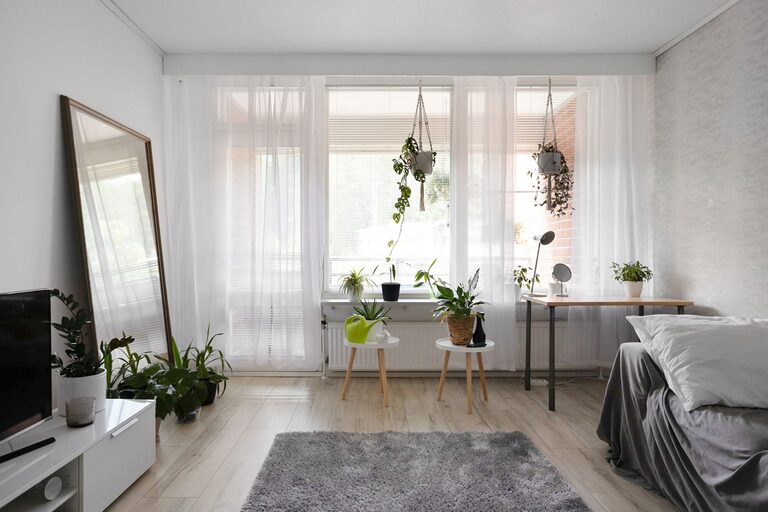
A dark room can feel cozy, but it may also seem smaller, duller, or less inviting than you would like. The good news is that you do not need a full renovation to make the space feel brighter. A few thoughtful changes to paint, lighting, furniture, and accessories can make a noticeable difference.
Whether the room has small windows, limited natural light, or dark finishes, these simple ideas can help create a lighter and more welcoming atmosphere.
Start With the Walls
Choose Light, Warm Colors
Wall color has a major effect on how bright a room feels. Light shades reflect more light, while dark colors tend to absorb it. Soft white, warm cream, pale beige, light gray, and gentle blue are all useful choices.
If a bright white feels too stark, choose a warmer shade with yellow, beige, or pink undertones. These colors can make the room feel comfortable without making it look flat or overly cold.
Before painting the entire room, test a few samples on different walls. Natural and artificial light can change how a color appears throughout the day.
Consider Painting the Ceiling
A dark ceiling can make a room feel lower and more enclosed. Painting it a light shade, such as soft white or a pale version of the wall color, can help create a sense of height.
For an especially dark room, use a finish with a small amount of sheen. Satin or eggshell paint can reflect more light than a completely flat finish, while still providing a soft appearance.
Keep Trim and Doors Light
Light-colored baseboards, door frames, and doors can add contrast and make the room look cleaner. If these features are currently dark wood or a strong color, consider painting them a warm white or another light neutral.
This simple update can help define the room’s edges and make the walls appear brighter.
Improve the Lighting
Layer Several Light Sources
One ceiling light is rarely enough to brighten a dark room. Instead, use several light sources at different heights. This approach spreads light more evenly and helps remove dark corners.
Try combining:
– A ceiling fixture for general lighting
– Floor or table lamps for extra brightness
– Wall sconces for focused light
– Small accent lights for shelves or artwork
– Task lighting near a desk, reading chair, or work area
Using multiple fixtures also allows you to adjust the mood of the room throughout the day.
Choose the Right Bulbs
Light bulb color can change the entire feel of a space. Bulbs labeled warm white create a comfortable, relaxed look, while neutral white bulbs provide a cleaner and more energetic appearance.
For a dark living room, bedroom, or hallway, bulbs in the soft white to neutral white range are often a good choice. Check the brightness rating before buying, and choose bulbs that provide enough light for the room’s size and purpose.
Avoid using bulbs with noticeably different color tones in the same space. Matching bulbs will make the room feel more balanced.
Add Light Behind Furniture
Hidden lighting can brighten areas that are often overlooked. Place a small lamp behind a sofa, add strip lighting beneath cabinets, or use a picture light above a shelf.
These low-profile options can create a gentle glow without taking up much floor or table space. They are particularly helpful in rooms with limited outlets or little natural light.
Use Mirrors Strategically
Mirrors can make a room feel more open by reflecting light and giving the impression of additional space. Place a mirror across from or beside a window to reflect daylight throughout the room.
If the room has no useful window, position a mirror opposite a lamp, light fixture, or bright wall. A large mirror can make a strong impact, but a group of smaller mirrors can also work well.
Choose frames that support the room’s style without making the wall feel heavy. Thin metal, pale wood, or frameless designs tend to keep the look light and airy.
Make the Most of Windows
Keep Window Treatments Simple
Heavy curtains and dark shades can block valuable daylight. Replace them with lightweight curtains in white, cream, or another pale color. Sheer panels can provide privacy while allowing light to pass through.
If you need more control over sunlight, pair sheer curtains with adjustable blinds or shades. Install curtain rods slightly wider and higher than the window frame to make the window appear larger and allow more light into the room.
Clean the Glass
Dust and smudges can reduce the amount of daylight entering a room. Clean both sides of the glass, along with the window frame and surrounding trim. This small maintenance task can make the space feel fresher immediately.
Keep the area near the window free from tall furniture and bulky decor whenever possible.
Choose Furniture Carefully
Dark, oversized furniture can make a room feel crowded. If replacing major pieces is not practical, use lighter textiles to soften their appearance.
Consider adding:
– A pale slipcover
– Light-colored cushions
– A textured throw blanket
– A cream or beige area rug
– Furniture with visible legs
Furniture raised off the floor allows more of the flooring to remain visible, which can make the room feel more spacious. Glass, acrylic, or slim metal tables can also reduce visual weight.
Try to leave clear pathways between furniture pieces. An organized layout often makes a room feel brighter, even before any lighting changes are made.
Add Reflective and Light-Textured Surfaces
Some materials help bounce light around the room. Look for small touches of glass, polished metal, glossy ceramic, or light wood.
You might add a glass coffee table, metallic picture frames, a ceramic lamp base, or decorative objects with a soft sheen. Use these finishes in moderation so the room feels bright rather than overly reflective.
Light-colored fabrics can have a similar effect. Linen, cotton, and woven materials in pale shades add texture while keeping the space visually open.
Refresh the Floor
A dark floor can make a room feel heavy, especially when combined with dark walls and furniture. A light area rug is one of the quickest ways to change the balance.
Choose a rug in cream, tan, light gray, or a soft pattern that includes pale colors. A larger rug can help unify the room and make furniture feel more connected.
If you have wood floors, a lighter rug can provide contrast. If the flooring is carpeted, layer a smaller textured rug over it for added warmth and brightness.
Add Plants and Fresh Decor
Green plants can bring energy to a room that feels flat or gloomy. Choose varieties that suit the amount of light available, and place them near windows or under suitable lamps.
If the room receives very little daylight, consider realistic artificial plants or simple branches in a light-colored vase. The goal is to add shape and life without filling every surface.
Artwork can also brighten a dark room. Select pieces with light backgrounds, open designs, or colors that complement the walls. Avoid covering every wall; leaving some open space helps the room feel less crowded.
Keep Clutter Under Control
Clutter can make a dark room feel even smaller. Clear unnecessary items from floors, tables, shelves, and window areas. Use baskets, cabinets, and decorative boxes to keep everyday objects organized.
Group a few favorite accessories together instead of spreading many small items throughout the room. Open, tidy surfaces reflect light more effectively and create a calmer appearance.
Make Small Changes First
You do not have to update everything at once. Start with the changes that are easiest and most affordable, such as replacing dark curtains, adding a floor lamp, cleaning the windows, or using a light area rug.
Once those updates are in place, observe the room at different times of day. You may then notice which corners need additional light or which colors feel too dark.
With a few practical adjustments, even a room with limited natural light can feel brighter, more comfortable, and more inviting.